

The Latin American and Caribbean Energy Organization (OLACDE) carried out a series of technical activities in Panama and Honduras as part of the Screen–LAC II Project, an initiative aimed at integrating climate risk management into national energy planning across Latin America and the Caribbean.
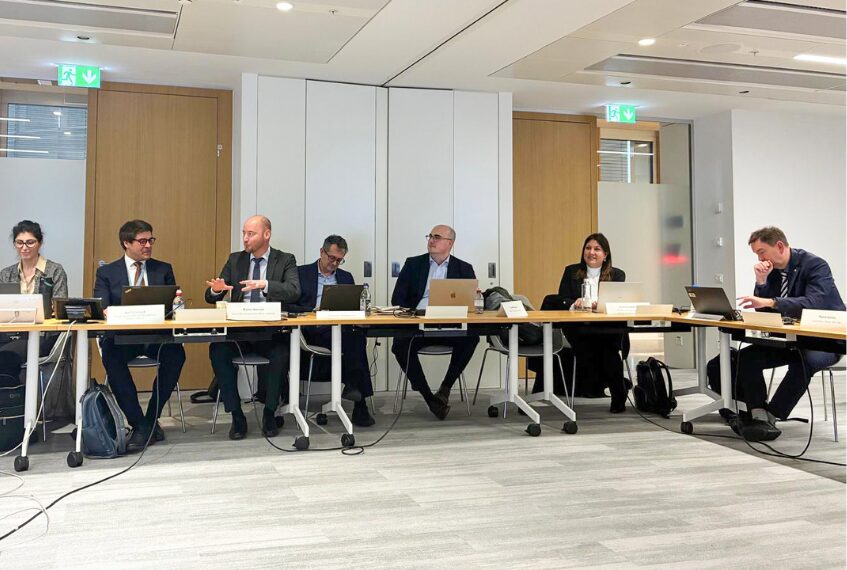
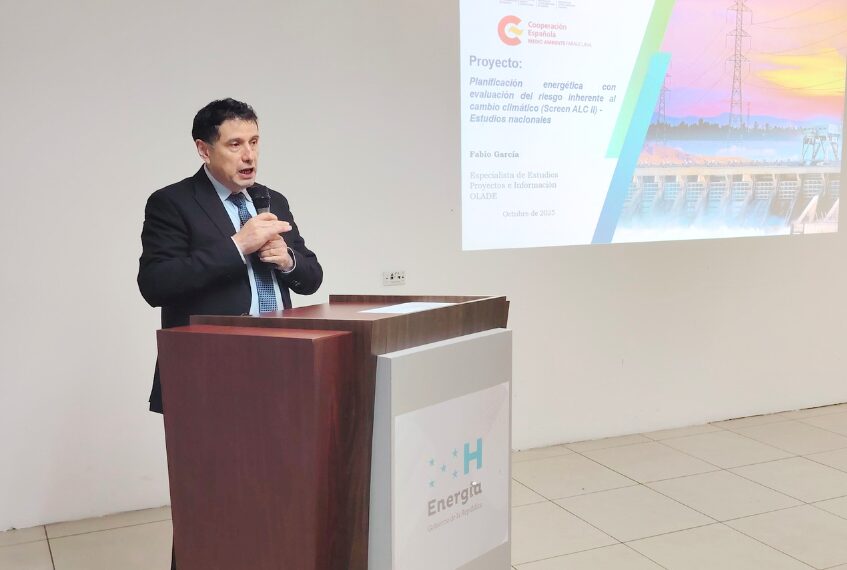
In Panama, OLACDE collaborated with the National Secretariat of Energy and ENEL during a technical mission focused on strengthening energy planning through climate risk assessment. During this visit, Fabio García, Specialist in Studies, Projects and Information at OLACDE, presented the project’s methodological framework and the progress of the national study, which centers on identifying vulnerabilities and proposing adaptation measures for the Panamanian energy system.
The agenda included a specialized analysis of the impacts of climate change on the energy sector, as well as a technical visit to the Fortuna Hydroelectric Plant, where the team reviewed its operational and technical characteristics and assessed its exposure to extreme climate events. This mission benefited from the strategic support of TECNALIA, a long-standing partner in strengthening energy resilience assessment across the region.
At the same time, OLACDE advanced the implementation of the Screen–LAC II Project in Honduras, in coordination with the Honduras Secretariat of Energy and with funding from the Spanish Agency for International Development Cooperation (AECID). As part of this effort, Fabio García conducted a technical visit to the Miraflores electrical substation in Tegucigalpa, where he evaluated key climate risks affecting energy infrastructure and identified adaptation measures needed to ensure a safer, more reliable, and more sustainable power system.
The actions undertaken in both countries reinforce OLACDE’s commitment to technical capacity-building and the development of tools that enable the nations of Latin America and the Caribbean to advance toward robust energy planning that incorporates resilience criteria in response to the growing challenges of climate change.
OLACDE will continue supporting its Member Countries in the implementation of policies, studies and adaptation actions that contribute to building a safer, more sustainable and more inclusive energy future for the region.