

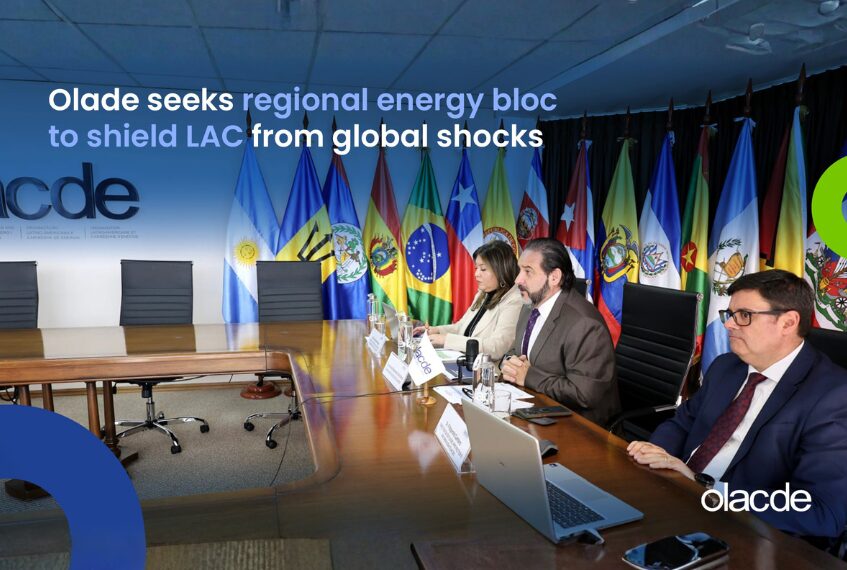
Latin America and the Caribbean are coordinating actions in the face of one of the most severe external shocks in recent decades. Energy ministers across the region agreed that the current crisis will be more effectively addressed through collective action rather than isolated national measures.
A Highly Fragile Global Scenario
The urgency is underscored by the global outlook presented by Keisuke Sadamori, Director of Energy Markets and Security at the International Energy Agency (IEA). According to Sadamori, the conflict has caused significant damage to more than 80 strategic facilities, including refineries and liquefied natural gas (LNG) plants.
“Cumulative oil supply losses exceeded 300 million barrels in March and could reach 400 million in April,” the IEA official warned, noting that volatility has driven up prices in key distribution hubs. This global shortfall is exerting direct pressure on Latin American and Caribbean economies, which are already facing diesel price increases of up to 64%.
Beyond Isolated Efforts in the Region
In light of this assessment, regional representatives agreed that a coordinated response should be structured around three strategic pillars:
Unity in the face of the emergency: A commitment to work jointly and in a coordinated manner to deepen regional energy integration.
A structured roadmap: Regional energy planning capable of enabling and facilitating timely responses to the crisis.
Energy transition: Ministers emphasized that the transition is not only an environmental objective but also a tool of sovereignty to reduce dependence on imported fuels.
Resilience and Renewable Leadership
With a world-leading 70% share of electricity generation from renewable sources, Latin America and the Caribbean are well positioned to advance joint planning and accelerate the energy transition to reduce dependence on costly fuel imports.
Andrés Rebolledo, Executive Secretary of OLACDE, stated that “since the onset of the armed conflict, oil prices have increased by nearly 50%, with gasoline and diesel prices rising on average by 15% and 21%, respectively, generating strong inflationary pressures and increased fiscal spending in response to this economic shock.”
Rebolledo also noted that “there is a clear willingness to work in a coordinated and collaborative manner and to move forward as a region in addressing one of the most significant energy crises in recent times,” emphasizing that the current situation requires accelerating integration to strengthen energy security.
Latin America and the Caribbean must evolve from reactive responses toward a more robust and sustainable energy architecture, consolidating itself as a strategic bloc amid ongoing global geopolitical energy uncertainty.
For more information, please contact:
Diana Soriano, Head of Communications
diana.soriano@olacde.org