

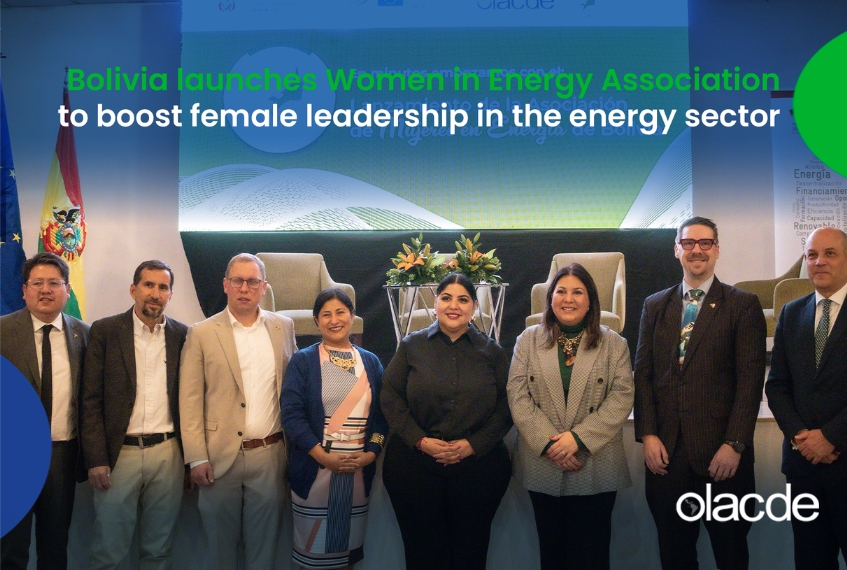
Bolivia has officially announced the establishment of the Bolivian Association of Women in Energy (AMEB), a national initiative designed to strengthen women’s leadership, advance gender equality, and foster greater participation of women in the transformation of the energy sector. The initiative is the result of a process launched in 2025 that brought together more than 250 women from all nine departments of the country, representing the public and private sectors, academia, civil society, and international cooperation organizations.
The launch took place during a series of sessions dedicated to strengthening AMEB’s institutional capacity, held from August 13 to 15 in La Paz. The event was supported by the Ministry of Hydrocarbons and Energy, as well as by the ProTransición program, implemented by German Cooperation through GIZ and co-financed by the European Union. The agenda focused on strengthening the association’s organizational and leadership capacities, developing operational plans for each committee, and advancing the institutional consolidation of the newly established organization.
During the event, Gloria Alvarenga, Director of Energy Integration, Access and Security at OLACDE, delivered a presentation entitled “Latin American and Caribbean Network of Women in Energy – RedLACME: Towards Regional Integration with a Gender Perspective.” In her remarks, she emphasized that women’s networks do not replace public policies or private-sector decision-making, but they provide an essential platform for creating opportunities, increasing visibility, fostering mentorship, and coordinating collective efforts. These networks enable younger generations to find role models; help women professionals access greater opportunities for career development; connect researchers and specialists with decision-makers; and allow national organizations to share their experiences and contribute to shaping a regional transformation agenda.
Building on this vision, OLACDE is advancing a regional gender and energy agenda, backed by the mandate of its Member Countries, aimed at integrating a gender perspective into energy-sector planning and decision-making. This work is carried out through technical assistance, evidence generation, capacity building, and support for initiatives designed to close gender gaps and expand opportunities for women and girls to participate and take on leadership roles across the energy sector.