

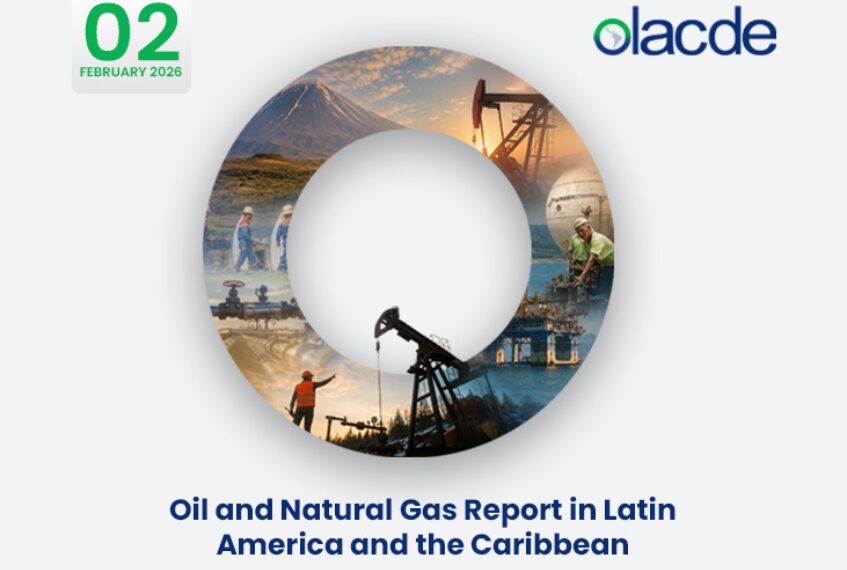
The region is entering a new phase of expansion in the hydrocarbons sector. According to OLACDE’s latest Oil and Natural Gas Report, oil production rose by 27% year-on-year in February 2026, reaching 377 million barrels, compared to 298 million barrels in the same month last year.
This increase reflects a significant restructuring of the regional energy landscape. Operational activity in Vaca Muerta (Argentina), record-high extraction in Brazil’s pre-salt layer, and rising output in Mexico are driving regional supply to levels not seen in the past twelve months.
On a monthly basis, production also grew by 4.4% compared to January, supported by the recovery in Brazil and Venezuela following declines in the previous month. Brazil, Mexico, and Venezuela account for 68% of total regional oil production, underscoring the strategic role these three countries play in the sector’s momentum across the region.
Natural gas: even faster growth
Natural gas production expanded at an even stronger pace. According to the report, output reached 26 billion cubic meters, representing a 30% year-on-year increase.
The main drivers behind this growth are once again Argentina and Brazil. The development of shale gas in Vaca Muerta, combined with unprecedented production in Brazil’s pre-salt fields, is reshaping the regional supply matrix at a time when natural gas is consolidating its role as a transition fuel to support electricity systems with high renewable penetration.
Argentina and Trinidad and Tobago lead the market with a 21% share each, followed by Brazil with 13%, Peru with 12%, while Venezuela, Bolivia, and Mexico each account for approximately 9%.
OLACDE’s report confirms that while the region remains a global leader in renewable electricity generation, it is also strengthening its role as a strategic global supplier of hydrocarbons.
Full report: https://www.olade.org/en/publicaciones/june-2026oil-and-natural-gas-report-in-latin-america-and-the-caribbean/