

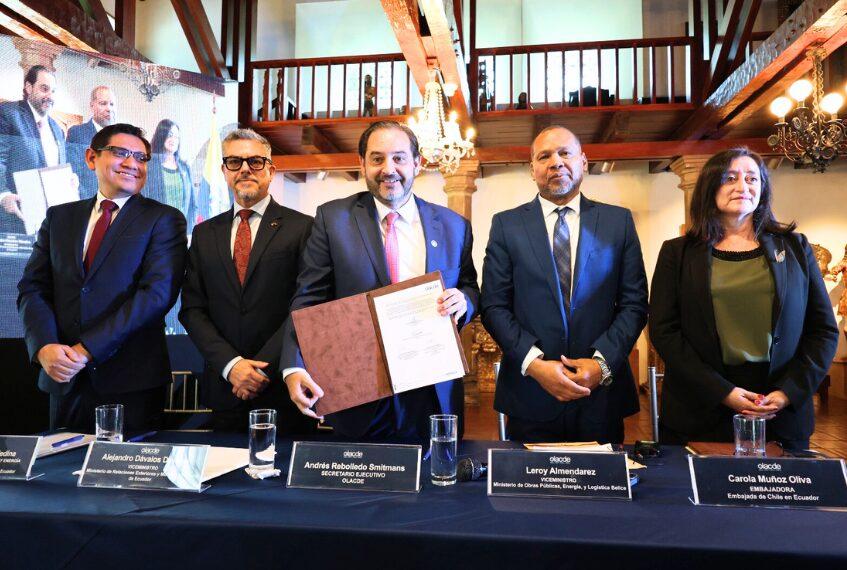
Chilean economist Andrés Rebolledo Smitmans has assumed his second term as Executive Secretary of the Latin American and Caribbean Energy Organization (OLACDE), a position for which he was re-elected for the 2026–2029 period during the 55th Meeting of Ministers of Energy of OLACDE, held in Chile in October 2025. The official ceremony took place on Monday, March 2, at the Casa Museo Guayasamín in Quito.
Rebolledo’s re-election represents an endorsement of the management carried out between 2023 and 2025, a period that proved key in consolidating OLACDE as a regional technical and political reference in energy matters. Amid a complex international context—shaped by the impacts of climate change on energy infrastructure and the need to strengthen security of supply—the Organization deepened its role as a platform for regional coordination, knowledge generation, and the building of strategic consensus for Latin America and the Caribbean.
During this three-year period, OLACDE contributed to strengthening regional energy integration by promoting electricity and gas interconnection initiatives and fostering a shared long-term vision through the creation of the Regional Energy Planning Council. This strategic body has enabled more structured coordination among member countries to anticipate challenges, harmonize policies, and build a forward-looking regional energy agenda. In addition, the Organization played an active role as Technical Secretariat in regional integration processes such as CELAC and the Brasilia Consensus.
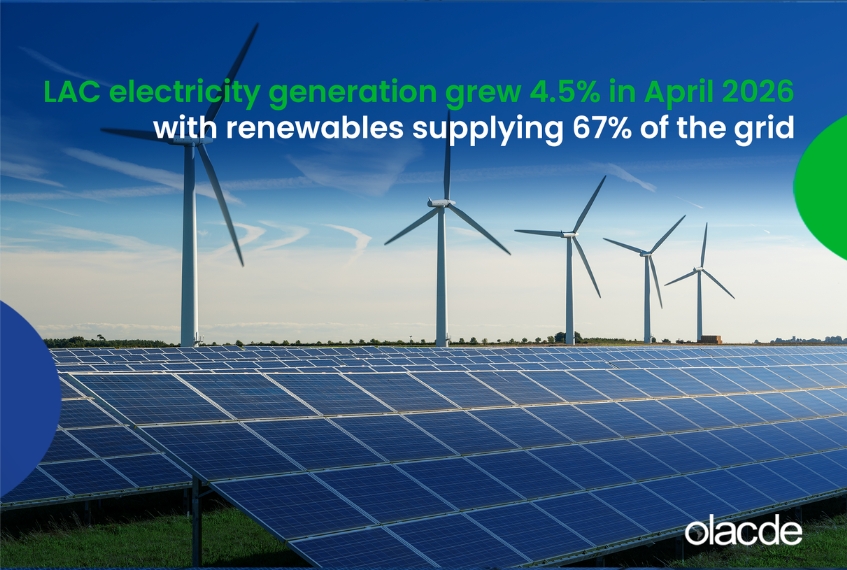
The administration was also marked by a significant increase in regional ambition for clean energy, with an agreement to reach 80% renewable electricity generation by 2030, positioning Latin America and the Caribbean as one of the world’s most advanced regions in the transition toward cleaner energy matrices. In parallel, OLACDE, together with the Inter-American Development Bank (IDB), advanced the construction of a regional agenda for the development and certification of low-emissions hydrogen, aimed at facilitating its integration into international markets and strengthening the region’s export positioning.
In the field of international cooperation, the Organization consolidated a network of more than 60 projects and agreements with multilateral organizations, cooperation agencies, academia, and the private sector, strengthening the technical capacities of member countries and expanding the scope of regional cooperation. As part of this process, twelve specialized Technical Groups were created, which have become permanent spaces for technical exchange, applied knowledge generation, and the development of regional initiatives in key areas of the energy sector.
A major milestone of the period was the creation of the OLACDE Business Council, which institutionalized public–private dialogue at the regional level with the aim of attracting investment, reducing regulatory gaps, and providing coordinated support for energy transition processes across the region. Likewise, the Latin America and the Caribbean Methane Emissions Observatory (OEMLAC) was established, positioning the region to address one of the main climate challenges associated with the energy sector through the strengthening of methodologies, data, and technical capacities.
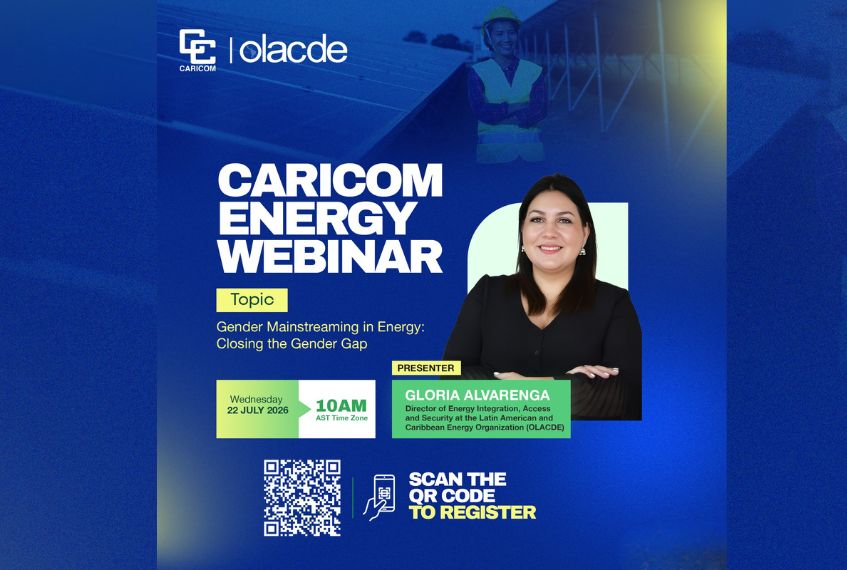
Human capital development was another central pillar of the administration. Between 2023 and 2025, more than 16,000 people participated in training programs, including workshops, courses, diplomas, and master’s programs developed in partnership with academic institutions across the region. This effort positioned OLACDE as a regional benchmark in energy training and was complemented by the development of a cross-cutting “Gender and Energy” agenda, which led to the creation of the Latin American and Caribbean Network of Women in Energy (REDLACME), as well as the active inclusion of youth and representatives of energy sector workers in regional dialogue with ministerial authorities.
With the start of this second term, OLACDE looks toward a new phase aimed at deepening regional energy integration, accelerating the adoption of clean technologies, strengthening universal access to energy, and advancing toward a resilient, inclusive, and long-term energy transition.
The 2026–2029 Management Plan is structured around seven strategic pillars that prioritize: 1) regional integration, 2) technical cooperation, 3) energy diplomacy, 4) security and access, 5) technological innovation, 6) capacity building, and 7) institutional modernization, with the objective of positioning Latin America and the Caribbean not only as a region rich in resources, but as a region capable of proposing energy solutions on the global stage.
Full event: https://www.youtube.com/watch?v=MjLQ02rtSSg