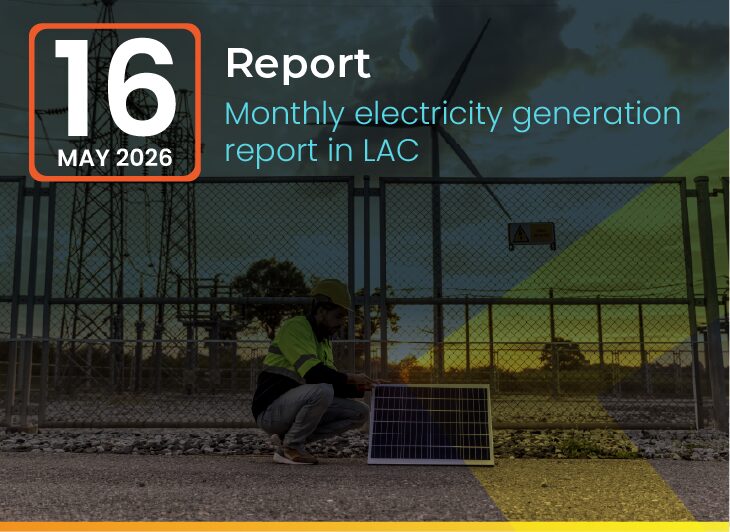


In May 2026, electricity generation in Latin America and the Caribbean reached 176 TWh, marking a 7.32% monthly increase compared to April. The regional power mix remained led by hydropower (43.4%), followed by natural gas (24.4%) and wind generation (11.6%), which together accounted for most of the electricity produced during the month. Other sources maintained smaller shares: oil and derivatives (5.8%), solar (4.7%), bioenergy (3.8%), coal (3.4%), nuclear (2.4%), and geothermal (0.5%).
On an annual basis, total generation increased 4.1% compared to May 2025, with hydropower remaining the dominant source. However, lower hydrological availability in May 2026 resulted in a 10.0 TWh decline in hydro generation, offset by higher contributions from natural gas, wind, coal, and oil and derivatives. This reflects a reconfiguration of the regional dispatch, with greater reliance on thermal sources and non‑hydro renewables.
Month‑to‑month variation showed increases across all sources except bioenergy, driven by climatic factors and higher electricity demand. The strongest rises were observed in oil and derivatives, coal, natural gas, and nuclear generation.
The regional renewability index stood at 64%, with nine countries exceeding this level: Paraguay, Uruguay, Costa Rica, Ecuador, Brazil, Colombia, Venezuela, Belize, and Peru. Between May 2025 and May 2026, the index fluctuated between 63% and 72%, underscoring the sustained predominance of renewable sources in the region’s electricity mix.