

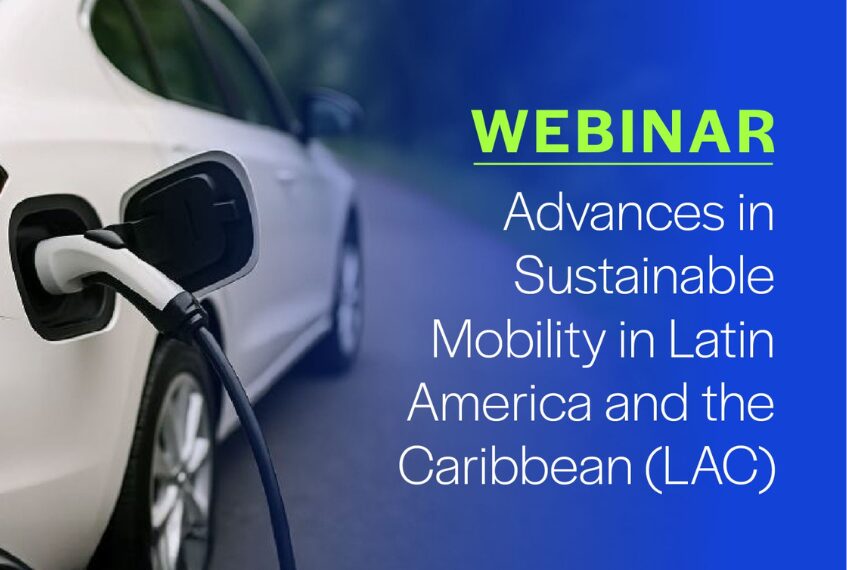
The Latin American and Caribbean Energy Organization (OLACDE) held the webinar “Advances in Sustainable Mobility in Latin America and the Caribbean,” a technical space aimed at strengthening capacities, sharing good practices, and promoting cooperation among member countries.
During the opening session, Gloria Alvarenga, OLACDE’s Director of Integration, Access and Energy Security, emphasized the strategic importance of these collaborative spaces and noted that OLACDE’s Technical Groups were approved by member countries in 2023, supported by the Lima Convention and the decisions adopted by the Board of Experts and the Meeting of Energy Ministers. “We promote the creation of technical groups to strengthen capacities and share good practices throughout the region,” Alvarenga highlighted, affirming that this mechanism enables progress on common priorities and fosters sustainable solutions based on direct exchange between institutions and specialists.
Later, Fitzgerald Cantero, OLACDE’s Director of Studies, Projects and Information, underscored the growing relevance of sustainable mobility in national agendas. He explained that, after analyzing regional trends and the development of OLACDE’s Electric Mobility Monitor, the organization decided to deepen its study and develop the White Paper on Sustainable Mobility, available in both Spanish and English. “Sustainable mobility has become a central issue in our countries; that is why we developed the White Paper to study it in greater depth,” he stated, while thanking the countries and experts who contributed to the process. The event also featured welcoming remarks from OLACDE’s Executive Secretary, Andrés Rebolledo, who stressed the importance of building a shared energy agenda that drives innovation and solutions for cleaner, more inclusive, and more resilient mobility across Latin America and the Caribbean.
The webinar presented experiences from various countries and institutions involved in the transition toward sustainable mobility. Hernán Nilo Fernández discussed electromobility in the region, highlighting incentives that have accelerated the adoption of electric vehicles in Colombia, Chile’s leadership in electric buses and successful public–private models, as well as the need to advance in standardization, charging infrastructure, and technical training with a gender perspective. María Dolores Ortiz Sánchez shared Madrid’s experience, focused on the Madrid 360 Strategy, the expansion of active mobility systems such as BiciMAD, and the pedestrianization of public spaces. Rachel Henriques presented Brazil’s progress, where 11% of vehicle sales already correspond to electrified units, driven by tax incentives, circulation benefits, and the integration of solar panels for home charging. From Uruguay, Antonella Tambasco highlighted that the country now exceeds 11,000 electric vehicles in 2025, is expanding its charging network, promoting a new sustainable urban policy, and developing circular economy regulations for battery management, in close regional cooperation. Finally, Felipe Quirama from the United Nations Environment Programme (UNEP) stressed that transport decarbonization requires strengthening electromobility, energy efficiency, public transportation, and active mobility, as well as promoting open data and gender equity as central pillars of the transition.
Through this webinar, OLACDE reaffirms its commitment to developing sustainable solutions, advancing energy integration, and strengthening regional capacities to accelerate the transition toward cleaner, more modern, and lower-impact transportation systems. The work of the Technical Group on Sustainable Mobility will continue to generate tools, analysis, and spaces for exchange that will enable countries to move forward together toward more efficient and sustainable mobility in Latin America and the Caribbean.