

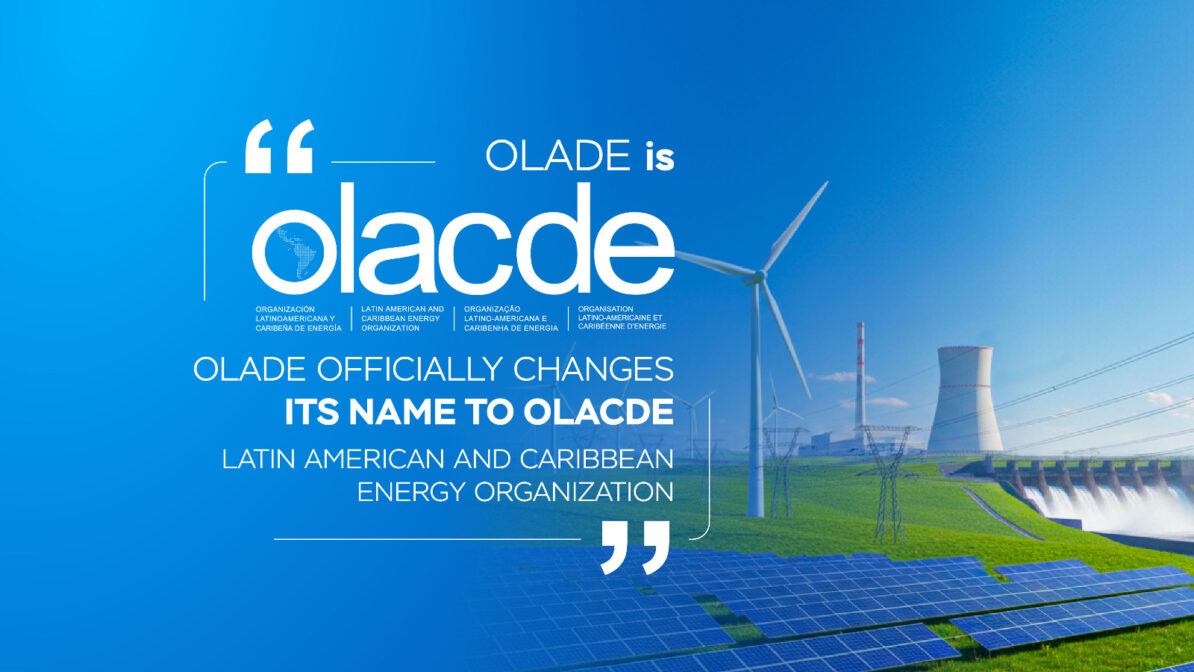
The Latin American Energy Organization (OLADE) announced the entry into force of its new official name: the Latin American and Caribbean Energy Organization (OLACDE), after the 27 Member States completed their respective internal approval and ratification processes required to formalize the modification of the name originally established in the 1973 Lima Convention.
The change consolidates a process initiated in 2007, when the Meeting of Ministers approved the proposal to amend Article 1 of the Lima Convention in order to highlight, in the denomination of the Organization, the presence of the countries of the Caribbean subregion. The process advanced with the approval of this modification within the internal legislation of the Member States, in compliance with Article 36 of the Lima Convention, which establishes that any amendment to its content shall only enter into force once the 27 Member States have formally deposited their ratification.
With Haiti’s ratification in October of this year, the process was officially completed and the name change became effective.
Executive Secretary Andrés Rebolledo stated that “ten of OLADE’s Member States belong to the Caribbean region, making the Organization’s name change a reinforcement of its integrative vocation and a reflection of the reality of a diverse regional energy space that today constitutes a Latin American and Caribbean community of cooperation, integration, and sustainable development.” He also highlighted that the modification of the name marks a milestone for the institutional identity and international projection of the Organization.
OLACDE will continue to fulfill its role as the highest-level technical-political energy body in the region, consolidating a common platform for cooperation, integration, and sustainable energy development. The new denomination will be progressively implemented across all official instruments.
About OLACDE
The Latin American and Caribbean Energy Organization (OLACDE) is an intergovernmental public organization for cooperation, coordination, and technical advisory services. It was established on November 2, 1973, through the signing of the Lima Convention, ratified by 27 countries of Latin America and the Caribbean. Its fundamental objective is to promote the integration, conservation, rational use, commercialization, and protection of the Region’s energy resources. Its headquarters are located in Quito, Ecuador.